
Technical SEO Vs On-Page SEO: A Comprehensive Guide
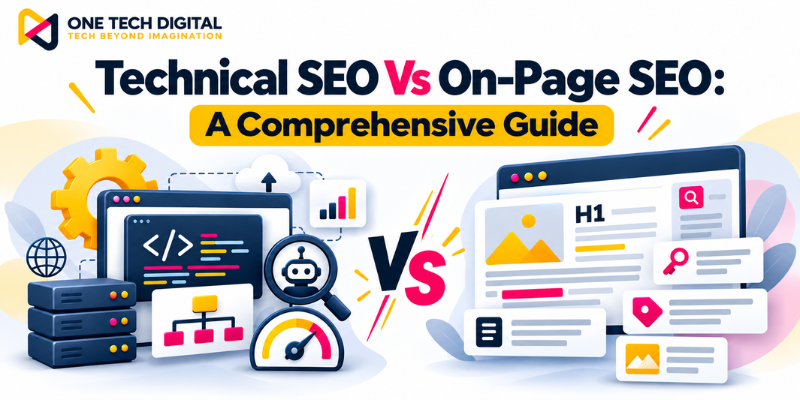
When it comes to improving a website’s search visibility, two important areas often come up: technical SEO vs on-page SEO. Both help search engines understand and rank your website, but they focus on different aspects.
Technical SEO focuses mainly on the website’s technical foundation, while on-page SEO improves the content and elements users see on individual pages. Understanding the difference can help you build a more complete SEO strategy.
What Is Technical SEO?
Technical SEO is the process of improving the technical aspects of a website so that search engines can crawl, understand, and index its pages efficiently.
It does not primarily focus on writing content. Instead, it deals with factors such as website speed, mobile usability, site architecture, crawlability, indexing, XML sitemaps, HTTPS, and Core Web Vitals.
For example, if important pages cannot be crawled or indexed by Google, even high-quality content may struggle to appear in search results.
Key Technical SEO Elements
- Website loading speed
- Mobile-friendliness
- Crawlability and indexability
- XML sitemap
- Robots.txt
- HTTPS and website security
- Canonical tags
- Core Web Vitals
- URL structure
- Internal linking and site architecture
What Is On-Page SEO?
On-page SEO focuses on optimizing individual webpages and their content for both search engines and users.
It includes elements such as headings, title tags, meta descriptions, keyword placement, content structure, images, internal links, and search intent.
Good on-page SEO makes a page easier to understand while ensuring that the content answers what the searcher is actually looking for.
Key On-Page SEO Elements
- SEO-friendly title tag
- Meta description
- H1, H2 and H3 headings
- Relevant keyword usage
- Search intent
- Helpful and original content
- Image optimization and alt text
- Internal linking
- Readable content structure
Technical SEO Vs On-Page SEO: Key Differences
| Factor | Technical SEO | On-Page SEO |
|---|---|---|
| Main focus | Website infrastructure | Page content and elements |
| Primary goal | Improve crawling, indexing and performance | Improve relevance and user experience |
| Works on | Site-wide technical factors | Individual webpages |
| Examples | Speed, sitemap, mobile usability | Content, headings, keywords |
| Main users | Search engines and users | Mainly users and search engines |
| Common tools | Google Search Console, PageSpeed Insights | Rank Math, Yoast, SEO tools |
Why Do You Need Both?
Technical SEO and on-page SEO are not competing approaches. They work together.
A technically strong website provides a solid foundation for search engines to crawl and index pages. However, technical improvements alone cannot make a page useful if its content does not satisfy search intent.
Similarly, well-written content may not perform as expected when technical problems prevent search engines from properly accessing the page.
A balanced SEO strategy should address both technical SEO and on-page optimization. You can explore SEO Services for professional SEO solutions covering both areas.
Frequently Asked Questions
Technical SEO improves the website’s technical foundation, while on-page SEO improves the content and HTML elements of individual pages.
Neither should be viewed as universally more important. Technical SEO helps search engines access your website, while on-page SEO helps them understand the relevance and value of your content.
A website may rank with limited technical optimization, but technical problems such as blocked crawling, poor mobile usability or indexing issues can restrict organic performance.
Yes. On-page SEO includes using relevant keywords naturally in appropriate areas such as headings, body content, titles and other page elements.
Yes. Combining both approaches creates a stronger foundation for sustainable organic search visibility.
Improve Your Website SEO
Need help with technical SEO, on-page optimization, content strategy, or overall website performance?OneTechDigital can help you identify SEO issues and build a practical optimization strategy focused on search visibility and user experience.